
By Dr. Young H. An, MD — Double Board-Certified ENT Surgeon | 25+ Years of Clinical Experience | ENT of Georgia South, Atlanta, GA
What are tonsil stones?
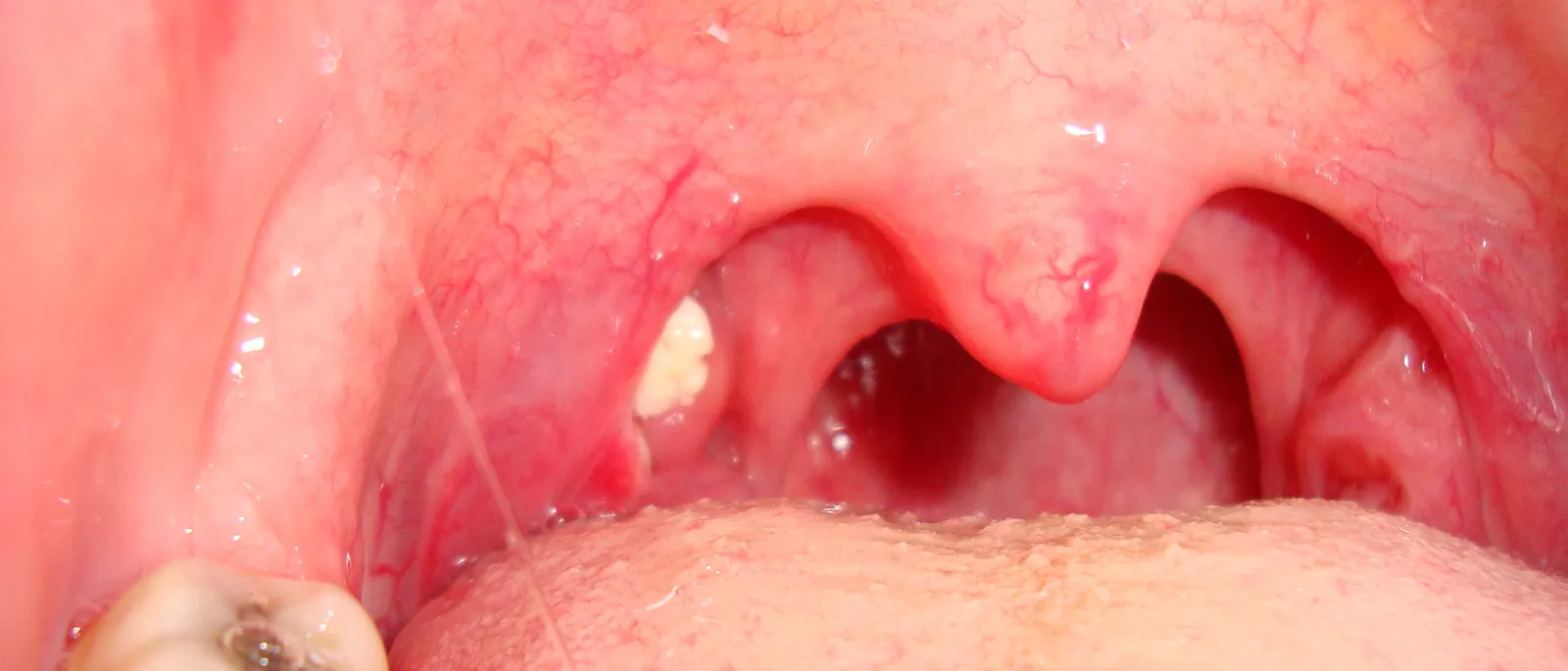
Tonsil stones — medically called tonsilloliths — are calcified deposits that form in the natural pockets of the tonsil surface. Tonsils are not smooth structures. They contain a network of deep crevices called crypts, which are designed to trap and filter bacteria and debris as part of the immune system.
In some individuals, these crypts are deeper or more irregular than average, which means debris accumulates faster than it can be naturally cleared. Over time, trapped material — food particles, dead cells, mucus, and bacteria — calcifies into small hardened deposits. The result is the white or yellowish material patients can see or feel at the back of the throat, often accompanied by persistent bad breath, a sensation of something stuck in the throat, or intermittent soreness.
Common symptoms include:
- A persistent bad smell or bad taste in the back of the throat
- A feeling that something is stuck or lodged in the throat (called globus sensation)
- Intermittent white or yellow deposits on the tonsil surface that appear, dislodge, and recur — distinct from fixed tonsil cysts, which remain attached and do not come and go
- Mild, chronic sore throat or irritation
- Occasional ear pain (because the tonsils and ear share nerve pathways)
Studies suggest that tonsil stones affect up to 10% of the population at some point, with a higher prevalence in people with naturally deeper tonsil crypts. They are significantly underdiagnosed because many patients — and some physicians — mistake the symptoms for chronic bad breath or a recurring infection.
Why tonsil stones keep coming back
The most important thing to understand about tonsil stones is that they are a structural problem, not a hygiene problem. The crypts that produce them are a permanent feature of the tonsil surface. No amount of gargling, brushing, or irrigation changes the depth or shape of those crypts. Home remedies help manage stones once they form — they do not prevent new ones from forming.
Think of it like a pothole in a road. You can sweep the debris out of a pothole repeatedly, but until the road surface is re-graded, the pothole will keep filling up. The same logic applies to tonsil crypts. Managing symptoms is reasonable for mild cases. For patients with frequent, large, or quality-of-life-affecting stones, addressing the structural surface is the definitive path to lasting relief.
Why common treatments fall short
Most patients arrive having already tried several approaches. Here is why each one has limitations:
- Saltwater gargles — Reduce bacteria and temporarily dislodge small stones. Do not prevent recurrence. Appropriate for mild, infrequent cases.
- Water flossers — Effective at removing accessible stones. The same limitation applies — the crypts refill because the underlying structure is unchanged.
- Antibiotics — Address bacterial infection, not stone formation. Not appropriate for routine tonsil stone management.
- Manual removal — Addresses individual stones but carries a risk of pushing debris deeper or causing minor trauma. Not a long-term strategy.
- Tonsillectomy — Permanently solves the problem by removing the tonsils entirely. Appropriate for some patients, particularly those with recurrent infections. For patients whose primary complaint is tonsil stones without chronic infection, the 2-3 week adult recovery can feel disproportionate to the problem.
What is Laser Tonsil Cryptolysis?
Laser Tonsil Cryptolysis (LTC) is a minimally invasive, office-based procedure that uses laser energy to re-contour and flatten the tonsil surface — reducing or eliminating the deep crypts where stones form. Rather than removing the tonsil entirely, the procedure targets the structural features responsible for stone formation while preserving the tonsil itself.
It is important to understand what the procedure does and does not do:
| The procedure does | The procedure does not |
|---|---|
| Vaporize the edges of tonsil crypts to flatten the surface | "Seal" or close the crypts with a plug or adhesive |
| Eliminate the pockets where stones accumulate | Require general anesthesia or a hospital stay |
| Preserve the tonsil tissue itself | Involve cutting, sutures, or significant bleeding risk |
| Allow same-day return home | Guarantee zero recurrence in all patients |
Procedure at a glance
- Duration: Approximately 15 minutes or less per side
- Setting: Office-based — no hospital required
- Anesthesia: Local only — you remain awake and comfortable
- Bleeding risk: Minimal — no cutting or sutures involved
- Recovery: Average 3-5 days of manageable soreness — individual experience varies
- Return to work: Most patients return within 1-2 days
- Cost: Laser Tonsil Cryptolysis is a cash-pay procedure. Fees are provided at the time of consultation.
Am I a candidate for this procedure?
Most adults with recurrent tonsil stones who have not responded to conservative management are potential candidates. You may be a good fit if:
- Tonsil stones recur despite consistent home management
- Stones are large enough to cause discomfort, difficulty swallowing, or persistent bad breath
- You want to avoid the recovery burden of a full tonsillectomy
- You have no history of recurrent tonsil infections requiring repeated courses of antibiotics (chronic infection is better addressed with tonsillectomy)
- You are an adult in generally good health
A consultation with an ENT specialist at ENT of Georgia South includes a thorough evaluation of your tonsil anatomy, symptom history, and candidacy. Some patients are not candidates — if that applies to your situation, you will be told directly and appropriate alternatives discussed.
Who may not be a candidate
Patients with very small or poorly accessible tonsils, a history of recurrent tonsillitis, certain bleeding disorders, patients currently on blood thinners, a particularly strong gag reflex, or those whose stone burden is mild and infrequent may not benefit from the procedure. You will receive an honest assessment at consultation — including being told directly if Laser Tonsil Cryptolysis is not the right option for your situation.
What to expect before, during, and after the procedure
Before
At your consultation, your ENT will examine your tonsils, review your symptom history, and determine whether you are a good candidate. If you move forward, pre-procedure instructions will be provided. No fasting is required — this is not a general anesthesia procedure. No special preparation is typically required beyond standard guidance about medications on the day of the procedure.
During
A local anesthetic is applied to the tonsil area to ensure comfort. You remain awake and seated throughout. The laser is applied precisely to the crypt edges and redundant tonsil tissue — you may feel mild pressure or warmth but should not experience significant pain. The appointment is scheduled for one hour, though the procedure itself is generally complete in less than 15 minutes per side. You will be able to drive yourself home in most cases.
After
Expect mild throat discomfort and a white coating on the tonsil surface in the days following the procedure — this is a normal part of healing and is not a sign of infection. Most patients manage discomfort with over-the-counter pain relief — prescription pain management is rarely needed. Average return to normal activities is 3-5 days. Soft foods and cool liquids are recommended for the first 48 hours. Avoid strenuous activity for 2-3 days. Full healing and surface maturation typically occurs over 6-8 weeks. A follow-up evaluation is scheduled within this window, and any targeted touch-up is considered at that time if needed.
What the white layer means: The white or yellowish coating that appears after the procedure is fibrin — the body's natural wound-healing protein. It is not infection, it is not a complication, and it is not a tonsil stone. It will resolve on its own within 10-14 days as the surface heals. Many patients mistake it for a problem; it is a sign of normal healing. Do not attempt to self-assess for recurrence during the active healing phase.
Who is more likely to need a touch-up?
There is no reliable way to predict in advance which patients will require additional treatment. However, certain factors are associated with a higher likelihood of scar tissue variability:
- Patients with particularly deep or complex crypt anatomy
- Individuals with a personal or family history of hyper-responsive scarring or keloid formation
- Cases where stone burden was extensive and multiple crypts required treatment
- Patients who experience repeated tonsil inflammation during the healing period
Monitoring your healing
The most important thing patients can do in the months after the procedure is monitor their symptoms honestly. If stone formation resumes in a specific area after the initial healing period has fully concluded — typically 6-8 weeks — that is the appropriate time to contact the practice and discuss whether a touch-up evaluation is warranted. Do not attempt to self-assess during the active healing phase, when the fibrin layer and early scar tissue can be mistaken for recurrence.
Frequently asked questions
Does the procedure hurt?
Local anesthesia is used, so discomfort during the procedure is minimal. Post-procedure soreness is typical and manageable with over-the-counter medication.
How long does recovery take?
Most patients return to normal activities within an average of 3-5 days. Full surface healing can take approximately 6-8 weeks.
Will my tonsil stones come back?
For most patients, the procedure delivers complete and lasting resolution. The structural changes to the tonsil surface eliminate the crypts where stones form — addressing the root cause rather than managing symptoms. A small number of patients may need a targeted touch-up after the initial healing period.
Is this covered by insurance?
Laser Tonsil Cryptolysis is a cash-pay procedure. Current procedure fees are provided at the time of consultation.
What if I am not a candidate?
Not everyone is a candidate for this procedure. If tonsillectomy or another approach is more appropriate for your situation, you will be advised accordingly during your consultation.
How is this different from tonsillectomy?
Tonsillectomy removes the tonsils entirely and requires a 2-3 week recovery in adults. Laser Tonsil Cryptolysis preserves the tonsils while re-contouring the surface, with a significantly shorter recovery period.
Can I do this if I've had tonsil infections in the past?
An isolated tonsil infection in the past does not automatically exclude you. However, a history of recurring infections may suggest deeper involvement of the tonsil tissue itself — beyond the surface crypts — which can affect candidacy. Your ENT of GA South physician will review your history at consultation and give you an honest assessment.
How long do results last?
For most patients, results are long-lasting because the structural cause — the crypts — has been addressed. Unlike temporary remedies, the anatomical change is permanent in the treated areas.
Is a touch-up procedure common?
Touch-up procedures are not the norm — most patients achieve their desired result after a single session. However, because scar tissue healing varies between individuals, a subset of patients may benefit from a targeted touch-up treatment after the tonsil surface has fully matured, typically 6-8 weeks after the original procedure. Your ENT of GA South physician will discuss this possibility during your consultation so you can plan accordingly.
Do I need to travel to Atlanta?
Yes — the procedure is performed at any of ENT of Georgia South's three Atlanta-area offices in Buckhead, Stockbridge, and Fayetteville. Many patients travel from outside Georgia specifically for this procedure. The short average recovery time of 3-5 days makes travel practical for most patients, and telemedicine consultations are available for out-of-area patients before committing to travel.
Schedule a consultation at ENT of Georgia South
ENT of Georgia South offers consultations for Laser Tonsil Cryptolysis at three metro Atlanta locations — Buckhead, Stockbridge, and Fayetteville. Telemedicine consultations are available for patients outside the Atlanta area. To schedule, visit entgasouth.com/patient-contact or call (770) 991-2800.
About the author

Dr. Young H. An, MD is a double board-certified ENT surgeon at ENT of Georgia South with 25 years of clinical experience. He specializes in minimally invasive, office-based treatments including Laser Tonsil Cryptolysis for patients with recurrent tonsil stones. Dr. An sees patients at ENT of Georgia South's Buckhead, Stockbridge, and Fayetteville locations.
Important disclaimers
This article is provided for educational purposes only. It is intended to provide a general understanding of tonsil stones and Laser Tonsil Cryptolysis. It does not constitute medical advice, a clinical recommendation, or a treatment plan for any individual patient.
Reading this article does not establish a doctor-patient relationship between you and Dr. Young H. An, MD or ENT of Georgia South. A formal consultation and clinical examination are required before any treatment decisions are made.
Individual results vary. Not all patients are candidates for Laser Tonsil Cryptolysis. The information presented reflects general clinical experience and published literature but may not apply to every patient's specific situation.
If you are experiencing symptoms that concern you, please consult a qualified physician promptly. Do not delay seeking medical care based on information contained in this article.
Image: Tonsilloliths prior to tonsillectomy. Source: Wikimedia Commons. License: CC BY 3.0
